
How To Choose The Right Drumsticks
Jun 29, 2026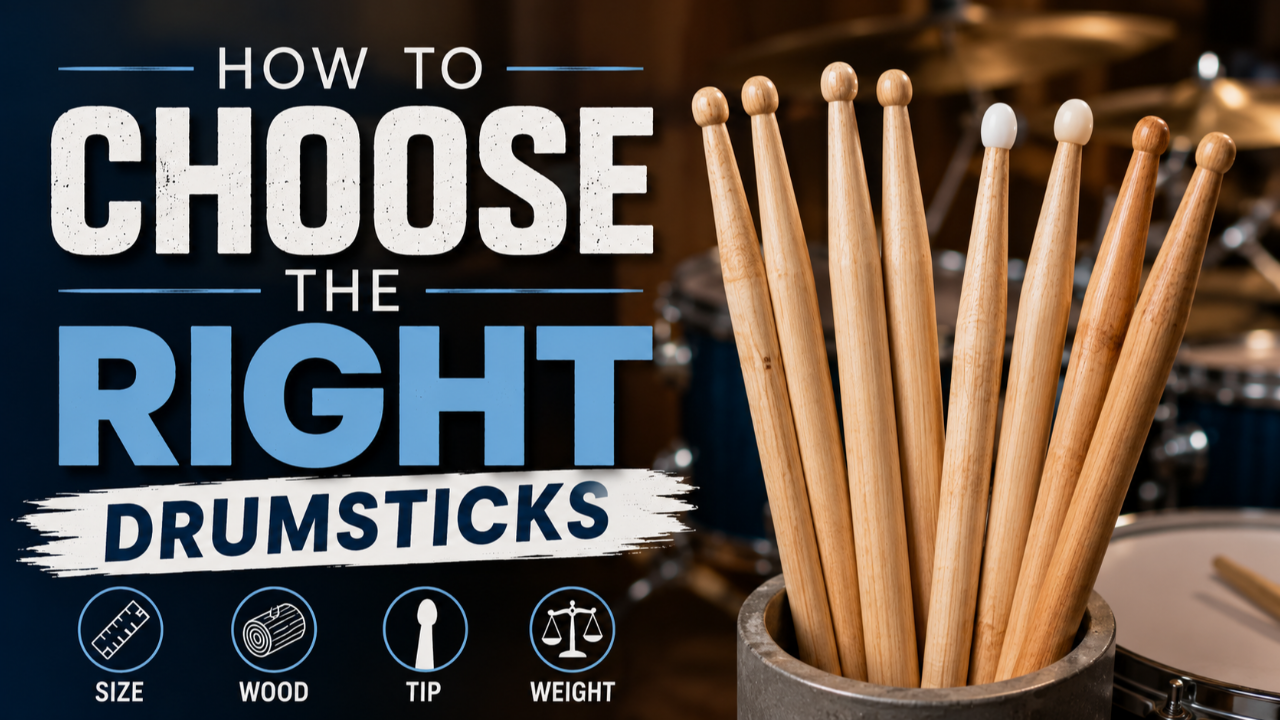
How to Choose the Right Drumsticks
Walk into any music store and you'll be faced with an entire wall of drumsticks. Different sizes, different woods, different tips, different lengths—and somehow they're all supposed to be "the best."
The truth is that choosing the right drumsticks isn't nearly as complicated as it first appears. The best pair of sticks is simply the one that feels comfortable in your hands and helps you play your best.
In this guide, we'll break down everything you need to know so you can confidently choose the right drumsticks for your playing style.
Start with Stick Size
The numbers and letters printed on drumsticks can seem confusing at first, but they actually tell you quite a lot.
The three most common sizes are:
7A
7A sticks are the lightest and thinnest of the popular sizes.
They're ideal for:
- Beginners
- Children
- Jazz
- Acoustic music
- Low-volume practice
Because they're lighter, they require less effort to move around the kit and can help new drummers develop good technique.
5A
If you could only own one pair of drumsticks, 5As would probably be the choice.
They're the industry standard because they're incredibly versatile.
Perfect for:
- Rock
- Pop
- Funk
- Worship
- Blues
- General practice
Most drum teachers recommend starting with 5As because they suit almost every style of music.
5B
5B sticks are slightly thicker and heavier.
They're great for:
- Hard rock
- Metal
- Loud bands
- Drummers who naturally hit hard
The extra weight provides more volume and durability, although they can feel a little tiring for complete beginners.
Other Sizes
You'll also come across:
- 2B – very thick and heavy
- 8D – longer but fairly light
- Rock models – often longer and heavier
- Signature models – designed around professional drummers
Don't worry about these when you're starting out. A good pair of 5A sticks covers almost everything you'll need.
Wood Makes a Difference
Most drumsticks are made from one of three woods.
Hickory
Hickory is by far the most popular choice.
Why?
- Excellent durability
- Good shock absorption
- Comfortable feel
- Balanced weight
Around the world, hickory is considered the gold standard for drumsticks.
Maple
Maple sticks are lighter than hickory.
Advantages include:
- Faster movement
- Less fatigue
- Great for jazz and lighter music
The trade-off is that maple sticks usually don't last as long.
Oak
Oak is the toughest of the three.
Benefits:
- Extremely durable
- Slightly heavier
- Great for heavy hitters
Some drummers love the solid feel, while others find them too rigid.
Wood Tip or Nylon Tip?
One of the easiest choices you'll make is the tip.
Wood Tips
Wood tips produce a warm, natural cymbal sound.
Most drummers prefer them because they're traditional and feel slightly more connected to the drumstick.
Nylon Tips
Nylon tips create:
- Brighter cymbal sounds
- More definition
- Better durability on the tip itself
If you play electronic drums or lots of cymbal-heavy music, nylon tips are worth considering.
Weight Matters More Than You Think
Many beginners assume heavier sticks automatically make them play louder.
Not necessarily.
Good volume comes from:
- Proper technique
- Relaxed movement
- Rebound
- Timing
In fact, many experienced drummers use lighter sticks because they can play for longer without tiring.
Choose a weight that feels natural rather than trying to impress people with huge sticks.
Length Changes the Feel
Even sticks with the same thickness can vary in length.
Longer sticks provide:
- More reach
- Slightly more power
- More leverage
Shorter sticks often feel:
- Faster
- More controlled
- Better balanced
Unless you have particularly long arms or play an unusually large drum kit, standard-length sticks work perfectly.
Balance and Taper
The taper is the section that narrows toward the tip.
A long taper creates:
- More rebound
- Faster response
- Lighter front end
A short taper creates:
- More power
- Stronger attack
- Heavier feel
You don't need to obsess over taper when buying your first pair, but it's something you'll start noticing as your playing develops.
Match the Stick to Your Music
Different styles naturally suit different sticks.
Rock
5A or 5B
Strong enough for louder playing while still remaining versatile.
Pop
5A
Probably the most common choice.
Jazz
7A or light maple sticks
These allow for greater finesse and dynamic control.
Metal
5B, 2B or heavier signature models
The added weight helps produce greater volume and withstand harder playing.
Practice Pad
Many drummers use slightly heavier sticks when practising rudiments, but your normal playing sticks are perfectly fine too.
Don't Buy the Cheapest Sticks
Very cheap drumsticks often:
- Warp quickly
- Break easily
- Feel inconsistent
- Have poor balance
Buying quality sticks from well-known brands will usually save money in the long run.
Popular manufacturers include:
- Vic Firth
- ProMark
- Vater
- Meinl Stick & Brush
- Los Cabos
- Regal Tip (where available)
Should Beginners Experiment?
Absolutely.
One of the best things you can do is try several different pairs.
Buy:
- One pair of 7A
- One pair of 5A
- One pair of 5B
Spend a week with each.
After a month you'll quickly discover which size feels most natural.
There's no "correct" answer—only what works best for you.
When Should You Replace Drumsticks?
Eventually every pair wears out.
Replace your sticks when you notice:
- Large chips
- Cracks
- Splits
- Bent shafts
- Significant weight differences between the pair
Playing with damaged sticks affects your sound and can even damage cymbals over time.
Final Thoughts
Choosing drumsticks doesn't need to be overwhelming. While there are hundreds of options available, most drummers can cover nearly every situation with just a few well-chosen pairs.
If you're just starting out, a pair of quality 5A hickory sticks with a wood tip is hard to beat. They're comfortable, versatile, durable, and suitable for almost every style of music you'll encounter.
As your skills grow, you'll naturally develop preferences for different sizes and weights depending on the music you play. Until then, focus less on finding the "perfect" drumstick and more on building solid technique. Good drummers can make almost any pair of sticks sound great.
